
Retain provider, source, currency, validity and conditions.
One operating record.
Every freight handoff.
CyberForward is designed around the real job: turn incomplete requests into controlled execution without losing commercial, compliance or customer context.
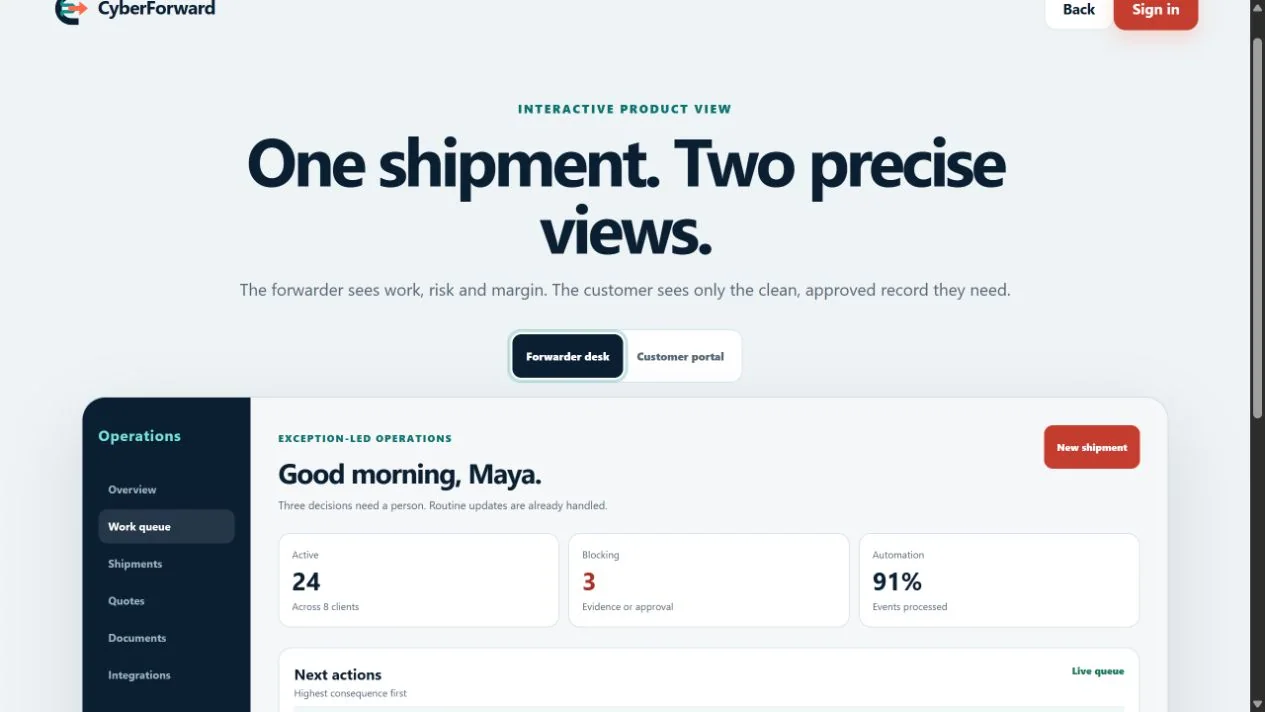
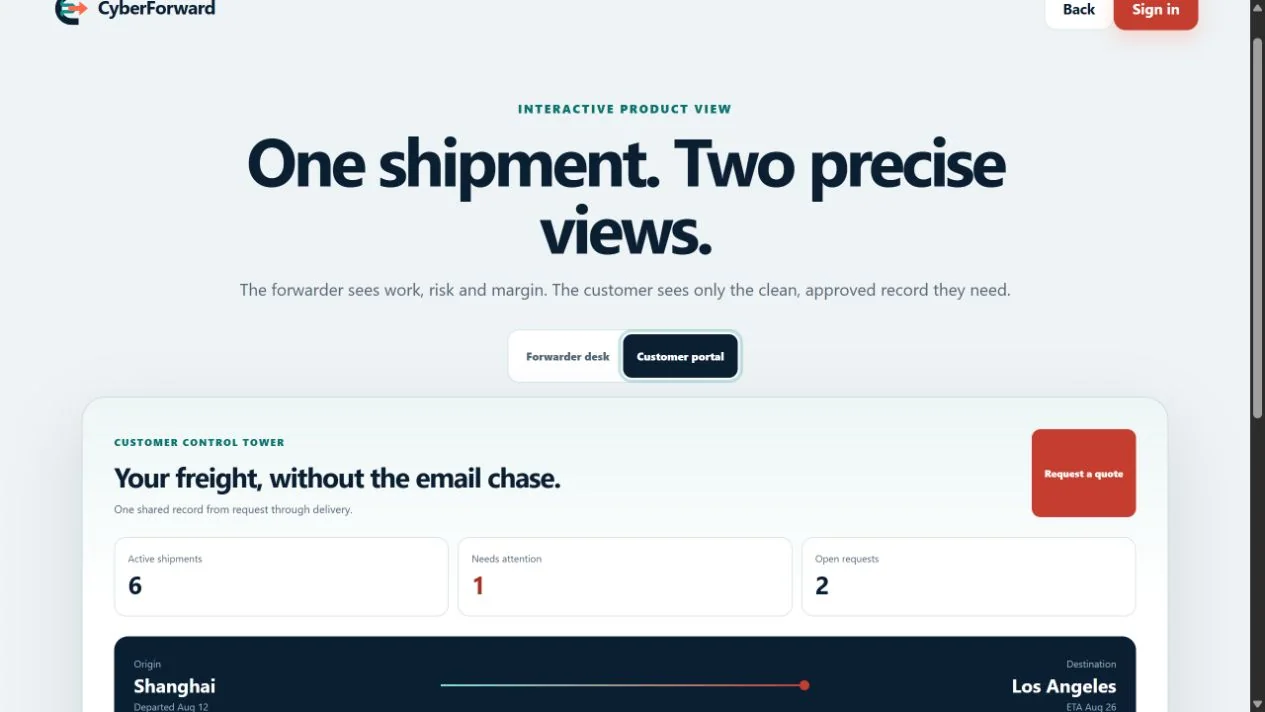
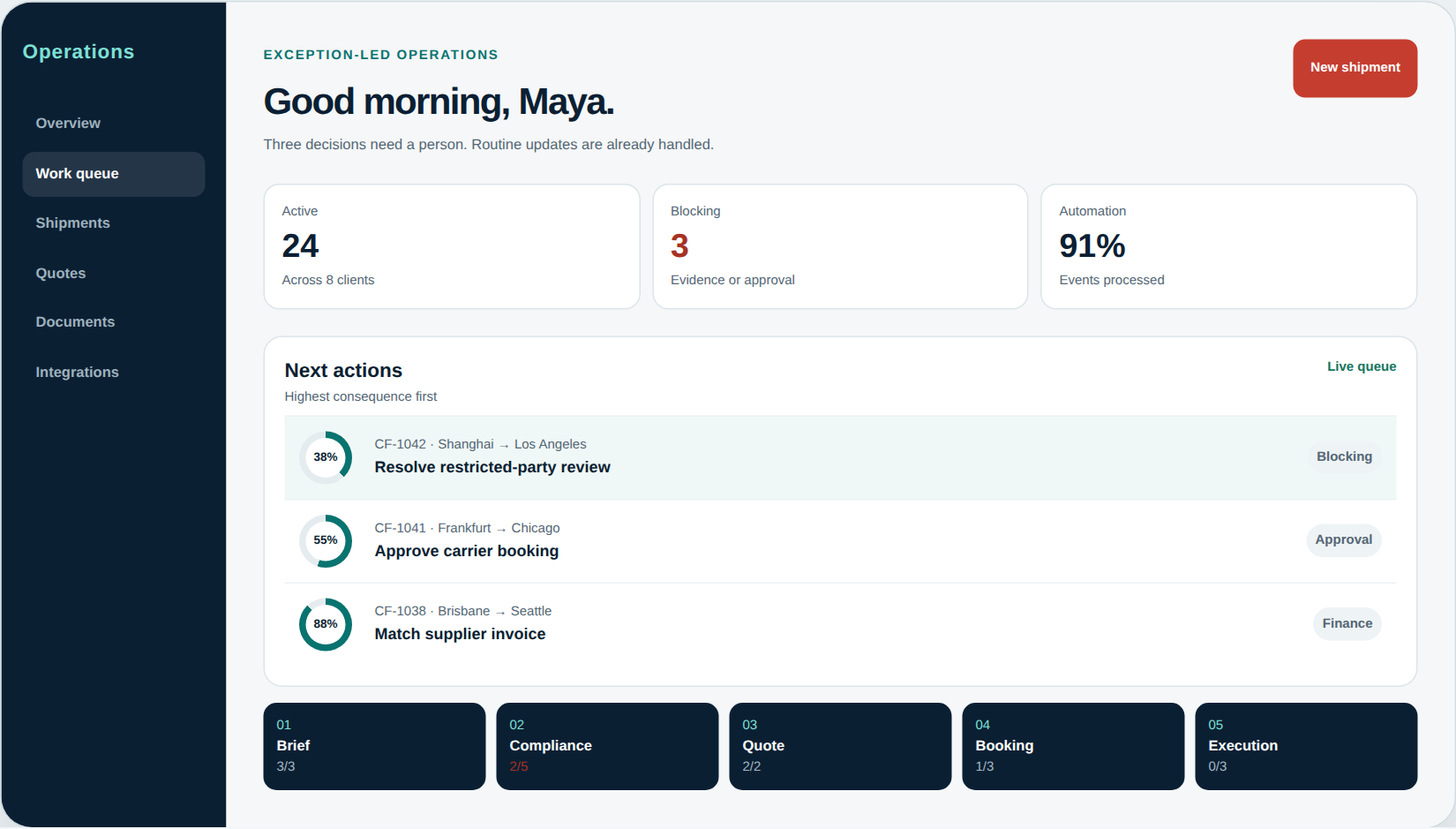
Work from the exception—not the inbox.The current product demo uses synthetic freight data so you can inspect the complete workflow without exposing customer information.
THE CONTROLLED FLOW
Automate preparation. Keep consequential decisions visible.
- 01AI prepares
Capture
Email, portal intake, spreadsheet or document upload becomes a structured draft. The source remains attached.
- 02Rules verify
Qualify
Missing parties, dates, lane details, commodities and compliance questions are surfaced before pricing.
- 03People approve
Quote
Approved supplier-rate source, validity, versioned customer terms, expected cost and expected margin live together.
- 04Events automate
Execute
Bookings, milestones, documents and provider events feed an exception-led queue.
- 05Finance closes
Reconcile
Actual supplier cost, customer invoice, payment and accounting mappings produce a quoted-versus-actual job margin.
RATE-TO-MARGIN CONTROL
Know what you quoted, what you paid and what the shipment actually made.
Keep the approved supplier-rate source, customer quote, actual supplier costs and final invoiced margin on the same job record. CyberForward makes variance visible before a weak margin disappears into month-end reporting.
Version charges, terms, expected cost and expected margin.
Capture supplier invoices, additions and approved exceptions.
Compare quoted versus actual profitability by shipment.
Data capture and routine updates
Classification, extraction, provider events, reminders and reconciliation preparation.
Commercial and regulated work
Quotes, customs data, insurance offers, invoices and exception summaries.
Consequential decisions
Compliance resolution, regulated submission, binding cover, release and non-standard commercial commitments.
START WITHOUT A TRANSFORMATION PROJECT
Put the next shipment through one clean workflow.
Start CyberForward for USD $50 per workspace each month. Add a managed ERPNext instance when finance needs the same operating record.
Start CyberForwardSee the productMonthly subscription. Cancel before renewal. Applicable tax and disclosed provider usage are additional.